Alan Gribben has been selected as the Fall 2025 Legacy Scholar by the Mark Twain Journal.
Subscribe to the Mark Twain Journal for original scholarship and commentary about Mark Twain.
The following is an annotated Contents Page for the Fall 2025 issue honoring Alan Gribben with notes by Irene Wong. At his side for over half a century, I could not have imagined a more affectionate, accurate, and complete tribute to Alan’s scholarship, teaching, principles, and friends.
Editor’s Note and “Alan Gribben: Legacy Scholar” by Joe B. Fulton
Thank you, Dr. Fulton, for this tribute issue. It’s gratifying to see that Alan’s 50 years of Mark Twain scholarship has “changed the course of criticism” about what books Mark Twain “owned, borrowed, read, and left notes in.”
Thank you to the students in Dr. Fulton’s English 3315 Literary Editing and Publishing course who assisted in the production of this 222-pages issue.
“My Alan Gribben” by Kevin Mac Donnell
Alan’s and Kevin’s friendship goes back to our years in Texas. They practically corresponded weekly, first in letters and later in emails. When we were empty nesters and downsizing, Alan asked me what to do with the copies of letters they exchanged, I suggested that he return them to Kevin. Those letters are about Twain’s books–many of which Mac Donnell acquired or had knowledge of. When I was the managing editor for the MTJ, I was grateful to Kevin Mac Donnell’s generosity in supplying images to use for an essay.
“Alan Gribben” by Jerome Loving
Dr. Loving knows Alan in the context of his years at the University of Texas as a professor. He provides an insightful tribute to a side that few see. They were like “twins,” as Loving points out, in that they occupied the same historical period but took different paths in scholarship and life. They were acquainted with the same professors and saw changes in their discipline in the teaching of English.
“Twain Scholar Shoves Twain Impersonator Off Stage [Not]” by Robert C. Evans
In our years in Montgomery since 1991, there has never been a better friend and colleague than Bob Evans. His sense of humor carried us through. Alan and Bob were very caring professors where students were concerned. They both went the extra mile. Both taught their courses with integrity and imagination.
“As the Mark Twain World Turns” by Alan Gribben
This essay sums up Alan’s views of Mark Twain scholarship as he experienced the decades.
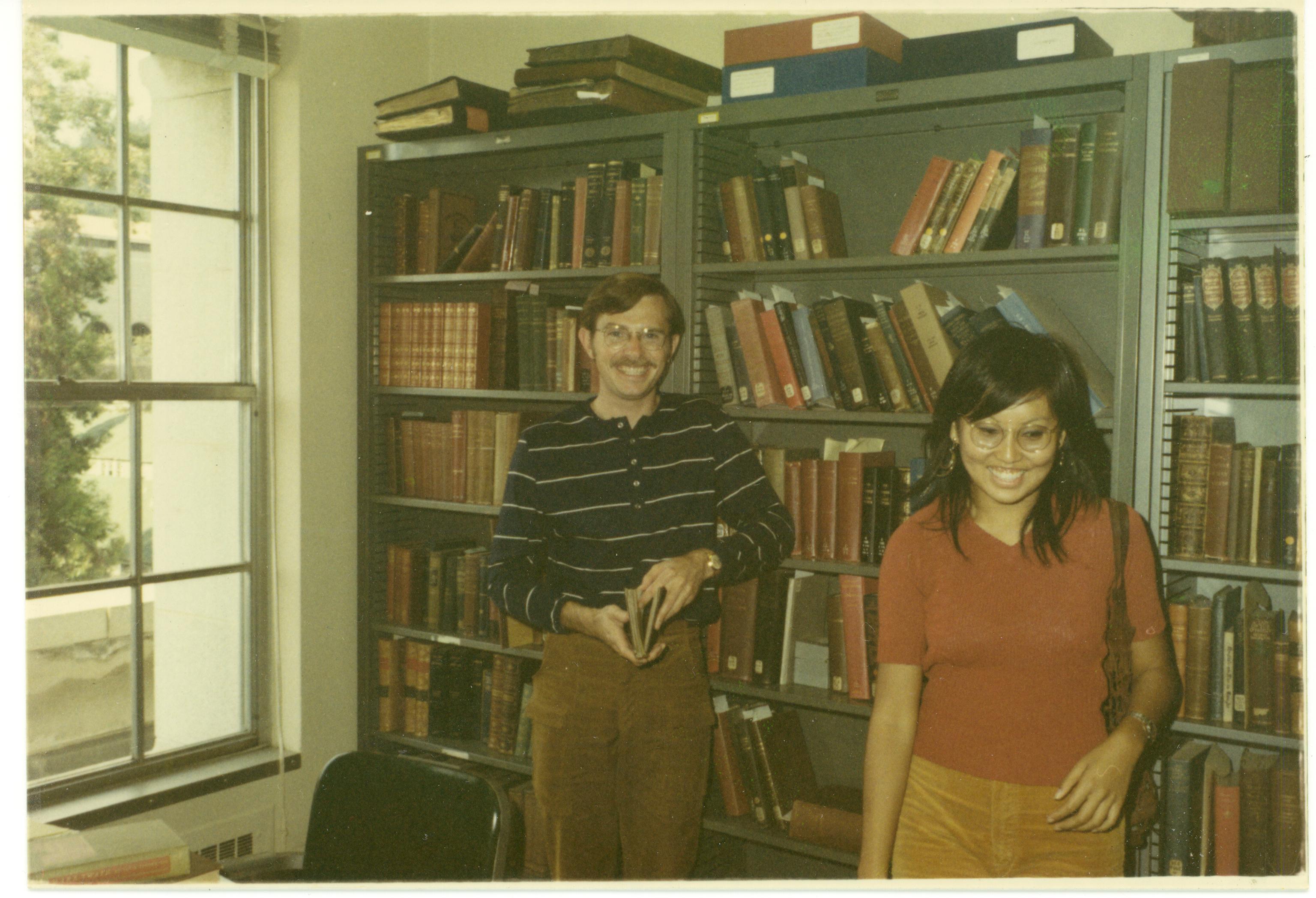
“Along for the Ride: An Essay in Photos” by Irene Wong
“Alan Gribben: A Literary Legacy” by Valerie Gribben
Our daughter reflects on visits to Mark Twain’s sites. “Instead of experiencing the sanitized thrills of theme parks during summer vacations, my brother and I frequented locations connected to Twain while my father worked to complete his magnum opus of a book detailing Mark Twain’s voracious reading.”
“Foreword to Mark Twain’s Literary Resources” by R. Kent Rasmussen
I read Rasmussen’s Foreword whenever I want to appreciate Alan’s achievement. One of Rasmussen’s gifts is that he can write an engaging and popular prose. After his groundbreaking Mark Twain Twain A to Z, he continued as an independent scholar and will soon finish his fifteenth Twain book: Mark Twain for Book Lovers, which makes “prodigious use of Alan Gribben’s Mark Twain’s Literary Resources.”
“From Mississippi to Yangtze: The Canonization Adventures of Tom Sawyer in China” by Tian Gangjian of Heilongjiang University. pp. 83-111
Pull back the bamboo curtain and you will see a re-incarnation of Twain’s Tom Sawyer thriving in socialist China. Professor Gangjian shows how Tom Sawyer has been translated in four time periods: 1932-1949, 1949-1978, 1978-2012, and 2012-present. This essay is illustrated with Chinese language book covers and images of Tom Sawyer with Asian features. Moving beyond print, Tom Sawyer is a Kung Fu character in literature with “performative and emotionally immersive formats, blending education with entertainment.”
A note ends of this essay: “The author wishes to express his sincere gratitude to Dr. Alan Gribben whose insightful research on Mark Twain has greatly inspired this article and many scholars of Twain in China.”
“‘All Kings Is Mostly Rapscallions’: The 1848 Hungarian Revolution and Huckleberry Finn“ by Zsanna Maria Bodor, Baylor University. pp. 112-137.
Baylor graduate student Bodor presents Huckleberry Finn in the light of a Hungarian translation of the novel and the 1848 Hungarian Revolution. One forgets that issues of slavery were debated worldwide and that slavery in America provided a reference point for “white slavery” in Europe. Bodor educates the reader about how the word “rapscallion” is translated and the nuanced underlying meanings of the Hungarian word. Most interesting is how the dialect Jim uses is translated when there isn’t an equivalent in the Hungarian language. I liked seeing the pages with illustrations from Twain’s first editions with Hungarian texts. Twain’s stories resonate wherever people appreciate a good story.
Bodor acknowledges how “Alan Gribben first directed my attention to Kossuth’s 1852 visit to Twain’s hometown of Hannibal, Missouri, confirming what I had already gleaned from Hungarian primary source materials.”
“Dickens’s Great Expectations in Harper’s Weekly and Twain’s Civil War: An Influence on Cairo in Huckleberry Finn” by Shimpei Ichinose, Shokei Gakuin University, Japan. pp. 139-167.
This thorough exploration of Twain’s writing of Huckleberry Finn and the serialization of Dicken’s Great Expectations in Harper’s Weekly does not claim that there is a direct connection between the two. Professor Ichinose carefully draws correspondences between Magwitch and Jim and Pip and Huck based on the fact that Twain faithfully read Harper’s Weekly. Professor Ichinose has collected the primary source material and illustrates the side-by-side Great Expectations columns next to a map about Cairo’s importance during the early part of the Civil War. Huck and Jim miss the Cairo connection where the raft needed to head north. Professor Ichinose recounts how the North and South clashed in the area and shows how Twain would have been courted by both sides, since pilots were in great demand to navigate the Mississippi. Furthermore, Professor Ichinose outlines Twain’s reluctance ever to talk about his short stint on the side of the Confederates, except comically.
Professor Ichinose credits Alan Gribben’s Mark Twain’s Literary Resources as “an indispensable resource for understanding the breadth and depth of Twain’s literary interests and, moreover, the network of influences that informed his writing.”
“Mark Twain, Paleontologist” by Hannah J. D. Wells, Baylor University. pp. 168-198.
Graduate student and Assistant Editor of the Mark Twain Journal Hannah Wells delights the reader with this essay about how Twain managed to cast doubt about the authorship of plays attributed to Shakespeare because the evidence points more toward Francis Bacon. However, Twain doesn’t insist on the Bacon’s authorship either. “Alan Gribben lists a wide variety of sources on Francis Bacon’s life and works among Twain’s literary resources; Gribben’s notes point to these volumes as some of the most heavily annotated works in Twain’s library.” Her study of the brontosaurus exhibit at the American Museum of Natural History in 1905 and Twain’s familiarity with the bones is interwoven with information regarding Twain’s Is Shakespeare Dead?
“You are Cordially Invited: Cyril Clemens’s Mark Twain Collection at Quincy University” by Cindy Lovell, Quincy University. pp. 199-205.
Cindy Lovell gives a tour with photographs of the Cyril Clemens’s Mark Twain Collection at Quincy University, where she teaches. The provenance of “400 books by or about Mark Twain” is unquestionable. Cyril Clemens founded the Mark Twain Journal and is related to the Clemens family as a third cousin twice removed. The essay reproduces three of Cyril’s collected testimonials and autographs from prominent and famous personages–Dan Beard, Eleanor Roosevelt, and Helen Keller–who penned a few sentences about Twain and his novels. One of my favorite things to do when Alan was editor was to look at Cyril’s issues of the Mark Twain Journal. I do remember Edna Ferber said that she relied on Huckleberry Finn to write her novel Show Boat (1926), which became a hit musical adaptation to the music of Hammerstein and Kern.
“The Confluence” by Peter N. Carroll
What a powerful poem about the Civil War and Huckleberry Finn! After reading about Cairo’s importance in Professor Shimpei Ichinose’s essay, the imagery is evocative. “Here lies the nation’s sin:/mixture of blue northern currents/And mud brown chattel.”
Excerpt from the book review of Tom Sawyer and Huckleberry Finn, the Translated Dialect Editions, Alan Gribben and Irene Wong, eds., by Joe B. Fulton
Alan Gribben and Irene Wong provide editions that “‘can be read aloud to any audience, of any age, anywhere.’ . . . thoughtful introductions . . . alterations to make the books acceptable to the classroom environment . . . render the dialect more accessible (and thus decreasing stereotypical depictions) . . . while tempering the impact on readers, especially in a classroom environment. . . preserve Mark Twain’s vision, rather than supplanting it . . . offer an alternative that can put Mark Twain back in every classroom. ‘You feel mighty free and easy and comfortable on a raft,’ Huck tells us. These editions of Tom Sawyer and Huckleberry Finn might just provide the freedom and ease in the classroom that will allow these masterpieces to sail on.”
 Dr. Alan Gribben, Scholar and Editor